


Keywords
Natural Heritage
Historic Ports
Yucatán
Campeche
Sisal
Progreso.
Abstract
This article focuses primarily on the areas of urban planning and heritage architecture and argues that, to understand the urban-architectural heritage of the historic ports of Mexico studied, it is necessary to understand both their geographical and socioeconomic characteristics, from their origins to the present day, which gave rise to the formation of the existing cultural heritage and the problems it faces. Linked to a natural marine environment, the actions of society have also impacted it, which, in some cases, is already considered protected heritage. While some historical antecedents are mentioned, the analysis of urban-architectural transformations is more focused on the period from economic liberalism, through Keynesianism, and ending with the current liberalism, which is in full transformation (19th, 20th, and 21st centuries). This historical research employs a mixed methodology, combining documentary and field research. The primary focus of analysis is the influence of economic model shifts on society and, consequently, on its urban-architectural and natural heritage. It examines how and when the most significant changes occur in elements now recognized and protected as heritage, as well as in those that, while considered heritage, do not receive the social or institutional protection or recognition they deserve. The study concludes that, despite their distinct origins and historical developments, Campeche, Sisal, and Progreso share common problems that require resolution.
References
Antochiw, M. (1994). Historia cartográfica de la península de Yucatán. Centro de Investigación y Estudios Avanzados del IPN, Gobierno del Estado de Campeche, Grupo Tribasa.
Baqueiro, S. (1899). Homenaje al distinguido yucateco J. Miguel Castro, fundador de la ciudad de “Puerto de Progreso” y Benemérito del Estado. Gamboa Guzmán.
Christensen, A. (1954). Pier at Progreso. 50 Years of Civil Engineering 1904-1954. Egmont H. Petersen.
Curia, C., Huerto, M. y Yuln, M. (2022). Patrimonio cultural: entre el producto y el proceso. Concepto, categorías y discursos. Análisis, 54(101). https://doi.org/10.15332/21459169.7394.
Dirección de Prensa y Publicidad del Gobierno del Estado. (1959). Sisal. Ensayo Monográfico. Zamná.
Ferrer, G. (1977). Historia de las comunicaciones. Enciclopedia Yucatánense Vol. III, 507-626.
Figueroa, R. (1863). Sisal. En J. Espinosa y Rendón (Ed.), Repertorio pintoresco (452–456).
García, A. y González, E. (2024). Últimos paraísos. Urbanización del espacio rural y resistencia social en el Pueblo Mágico de Sisal, Yucatán. Investigaciones Geográficas (115), 1–17.
García, M. (2006). Campeche y el comercio atlántico yucateco (1561–1625). Conaculta-INAH-Gobierno del Estado de Campeche.
Garza, G. (2005). La urbanización de México en el siglo XX. El Colegio de México.
Giddens, A. (1995). La constitución de la sociedad. Bases para la teoría de la estructuración, Buenos Aires, Amorrortu.
Harvey, D. (2007). Breve Historia del Neoliberalismo. Akal.
Harvey, D. (2013). Ciudades rebeldes. Del derecho de la ciudad a la revolución urbana, Akal.
Herrera, L. (2022). La comunidad o las comunidades como patrimonios culturales de la humanidad. Argumentaciones teóricas. Antropología: Cuadernos de Investigación (26), 12–25. https://dialnet.unirioja.es/servlet/articulo?codigo=8627185
Lefebvre, H. (1991). The Production of Space, Oxford, Blackwell.
Pibernat, L. (2017). El patrimonio como legitimador del poder (turístico). Hermus. Heritage & Museography, 18, pp.72–86.
https://raco.cat/index.php/Hermus/article/view/338103/428978
Quintana Sosa, Rafael, et al. (1996). Historia de Campeche. Gobierno del Estado de Campeche, Secretaría de Educación, Cultura y Deporte.
Quintanar, I. (2015). Entre liberalismo y nacionalismo en México. El pensamiento económico de José Yves Limantour (1892-1911). Economía, XXXVIII (76), 189-212.
Sánchez, M. (1892). Plano de la ciudad de Progreso de Castro, 1892. Mapoteca “Manuel Orozco y Berra”, del Servicio de Información Agroalimentaria y Pesquera.
Soja, E. (2003). Postmodern Geographies. The Reassertion of Space in Critical Social Theory, New York: Verso.
Torales, G. (2025). La construcción del paisaje costero de Sisal, Yucatán (1807-1990): una aproximación desde la ecología histórica. En Sillares. (pp.)
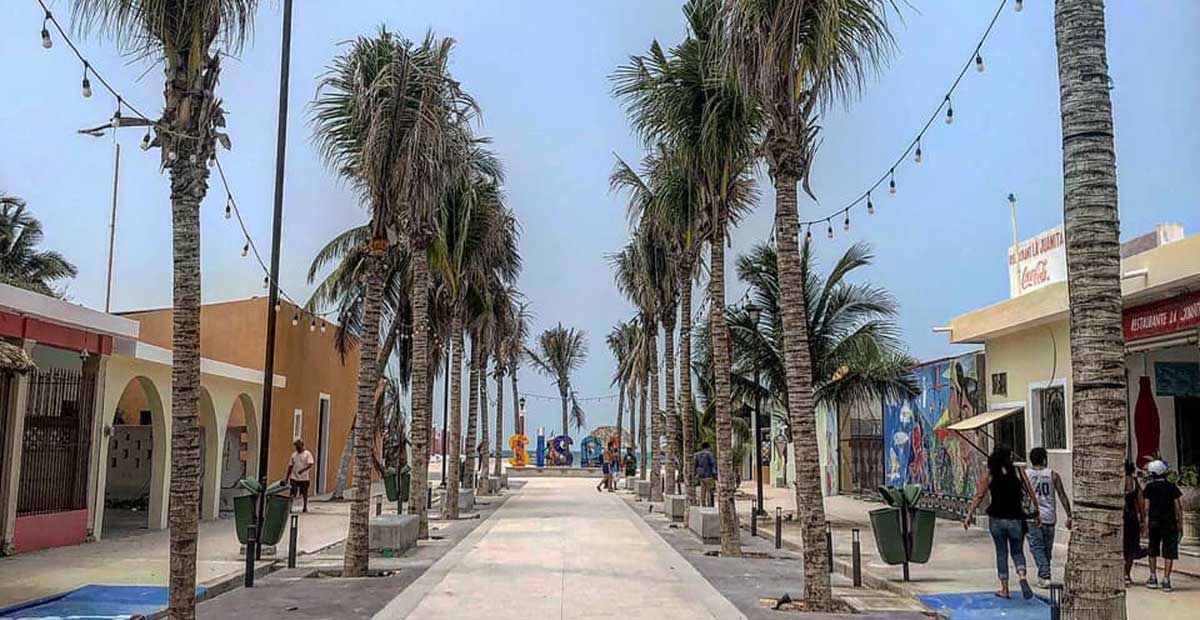
Turismo a fondo.mx (s/f). Sisal entrada. https://turismoafondo.mx/wp-content/uploads/2021/06/sisal_entrada.jpg
Unikel, L. (1978). El desarrollo urbano de México: diagnóstico e implicaciones futuras. El Colegio de México.
Archivos fotográficos de Pablo Chico Ponce de León y de la autora.